



Forthcoming
Books to look forward to, D.V.
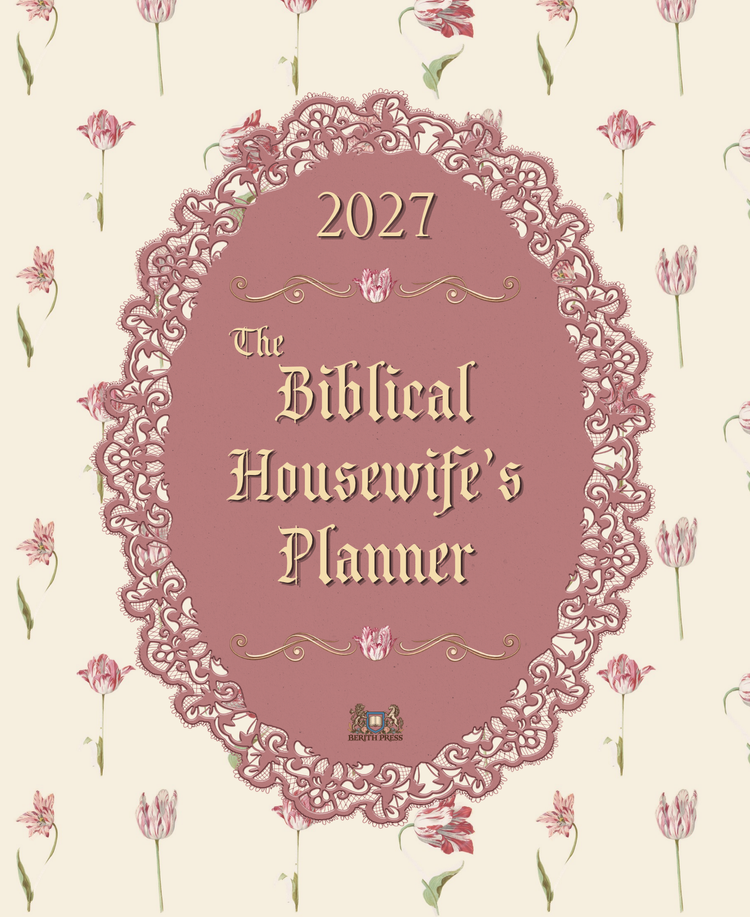
The Biblical Housewife’s Planner
The Biblical Housewife’s Planner, a planner connecting the practical ordering of a Christian home with the duties of marriage, motherhood, and household stewardship.
Its planned features include:
A weekly marriage checklist, with reminders to consult her husband and make time for meaningful conversation.
Space for questions and matters to discuss with her husband, including household decisions, children’s needs, and concerns requiring his counsel.
A private marital intimacy tracker.
A virtue of the month, grounded in Scripture and accompanied by selections and practical direction from William Gouge and James Fordyce.
Robert Murray M’Cheyne’s Bible reading plan.
A yearlong schedule through the Westminster Shorter Catechism.
Homeschool planning, practical household planning, and room for prayer.
We want this planner to give deliberate attention to a woman’s communion with God, relationship with her husband, instruction of her children, and care of the household.
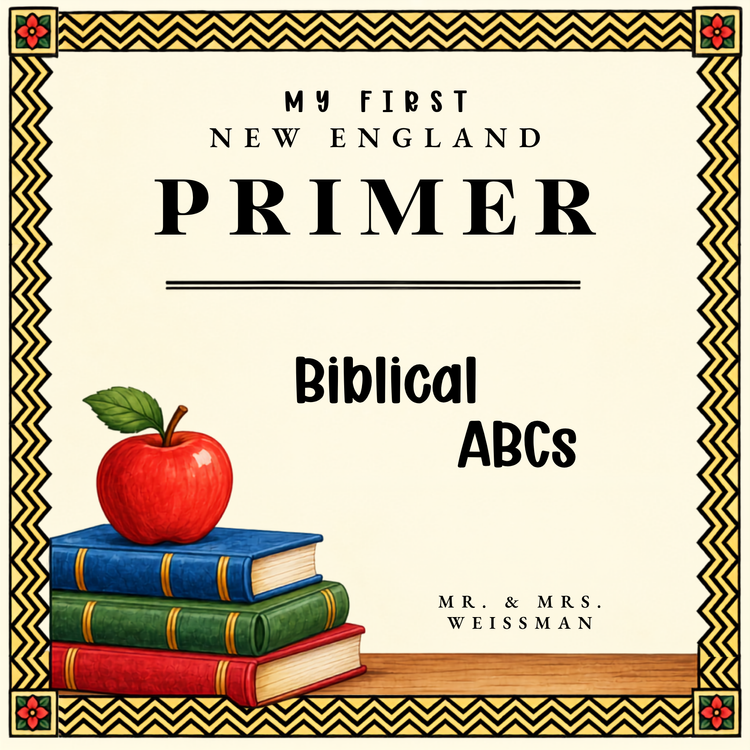
My First New England Primer: Biblical ABCs Board Book
My First New England Primer Board Book brings one of early America’s most beloved teaching tools to a new generation. Drawing from the historic New England Primer, this edition presents its memorable biblical alphabet with newly modernized illustrations designed to be clear, engaging, and accessible for young children while preserving the distinctly Christian character of the original. Perfect for home and school use, My First New England Primer introduces children to letters through Scripture, biblical history, and timeless lessons of faith and character. It is a delightful way to combine early literacy with the rich heritage of historic Christian education. Appropriate for ages 0+.
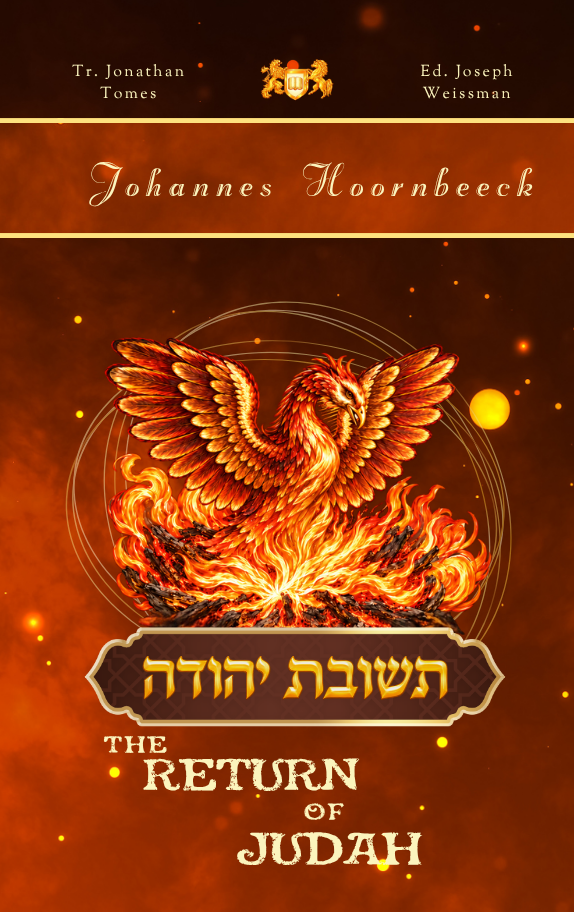
The Return of Judah
Across eight books, Johannes Hoornbeeck draws upon the Old Testament, Jewish writings, and Reformed theology to demonstrate that Jesus Christ is Israel’s promised Messiah. His treatment extends from Scripture and the claims of the oral law to the Trinity, Christ’s deity and saving work, justification, the fulfillment of the Mosaic law, and the resurrection. Throughout, extensive learning serves an earnest desire for the conversion of the Jewish people. This substantial work offers pastors and thoughtful Christians a rich resource for understanding messianic prophecy, answering objections to the gospel, and recognizing the unity of God’s revelation in Christ.
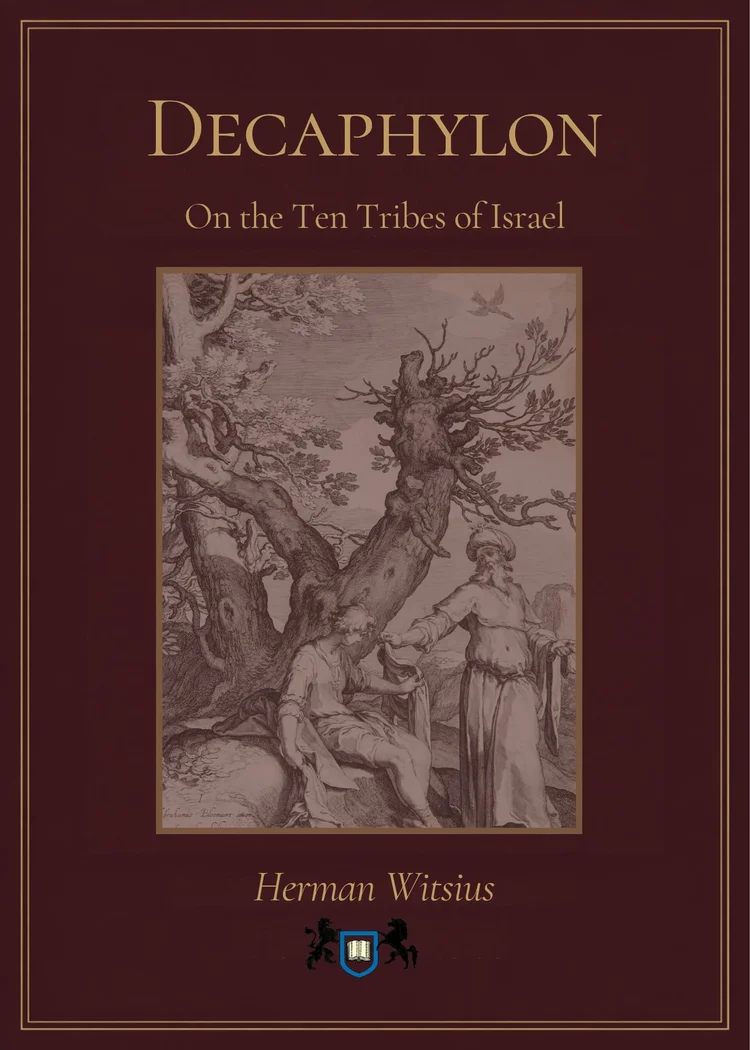
Decaphylon: On the Ten Tribes of Israel
What became of the ten lost tribes of Israel, and what does Scripture reveal concerning their future? In Decaphylon, the celebrated Reformed theologian Herman Witsius traces the history of Israel’s ten tribes from their separation under Jeroboam through the Assyrian captivity, their dispersion among the nations, and their subsequent history. Drawing upon Scripture, ancient history, and Jewish and Christian scholarship, Witsius examines the prophetic promises of Israel’s restoration. He argues for the future conversion of Israel to Christ and its restoration to its homeland, while carefully defending the spiritual and universal character of Christ’s kingdom.
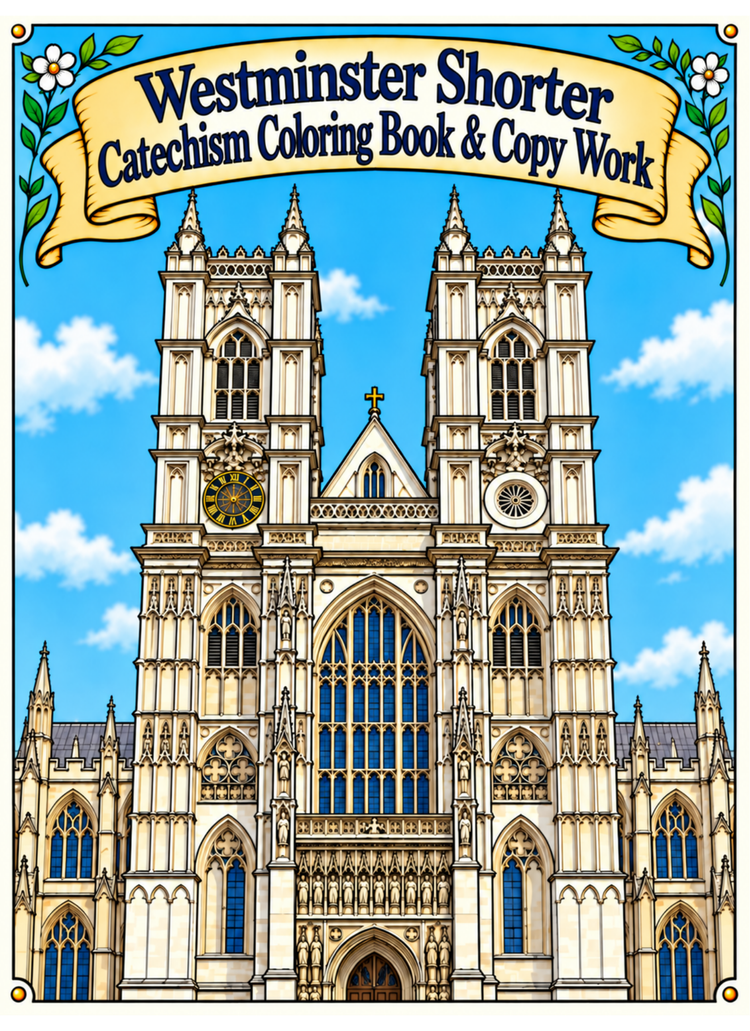
Westminster Shorter Catechism Coloring Book & Copy Work
Introduce children to the rich truths of the Christian faith with the Westminster Shorter Catechism Coloring Book & Copy Work. Designed to make catechism learning both engaging and memorable, this volume pairs the historic questions and answers of the Westminster Shorter Catechism with inviting illustrations to color and copy-work exercises for handwriting practice and reinforcement. Ideal for homeschool, Lord’s Day activities, Christian classrooms, or independent study, this book helps children slow down, reflect on each catechism answer, and become familiar with the language of historic Reformed doctrine while developing fine-motor and handwriting skills. A simple, beautiful resource for helping the next generation learn, write, remember, and delight in the great truths of the faith. Appropriate for ages 4+.
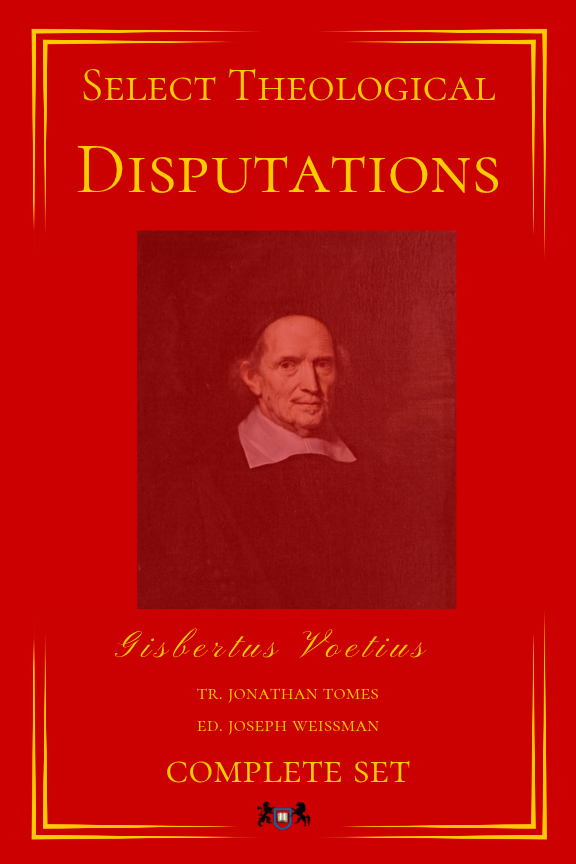
Select Theological Disputations
This extensive collection opens the theological classroom of one of the foremost representatives of seventeenth-century Reformed orthodoxy. Voetius examines the authority and interpretation of Scripture, the doctrine of God, the person and work of Christ, salvation, practical godliness, and the controversies confronting the church. His method brings biblical exposition into conversation with precise definitions, searching questions, objections, and replies, drawing extensively upon earlier Christian learning. Throughout, rigorous scholarship serves the defense of the faith and the cultivation of holiness. The full set gives pastors, students, and serious readers access to the breadth of Voetius’ theological thought, recovering a substantial resource for understanding both the convictions and the intellectual life of the Reformed churches.
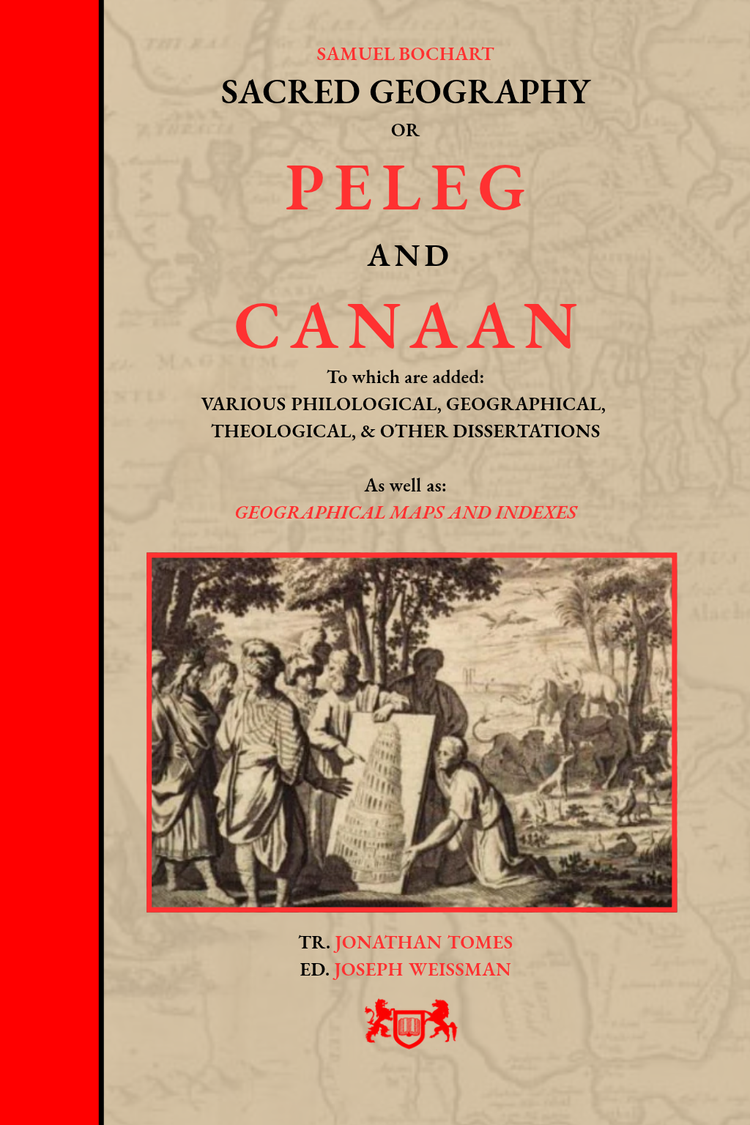
Sacred Geography
This monumental work brings the learning of a distinguished French Reformed scholar to the peoples, languages, and places of the biblical world. In Phaleg, Bochart investigates the dispersion of the nations and the descendants of Noah; in Canaan, he examines the voyages, settlements, and language of the Phoenicians. Drawing extensively upon Scripture, ancient historians, geographical writings, and several languages, he explores the connections between biblical history and the wider ancient world. Accompanied by philological, geographical, and theological dissertations, Sacred Geography recovers a major achievement of Protestant scholarship for readers interested in Genesis, ancient history, and the history of biblical interpretation.
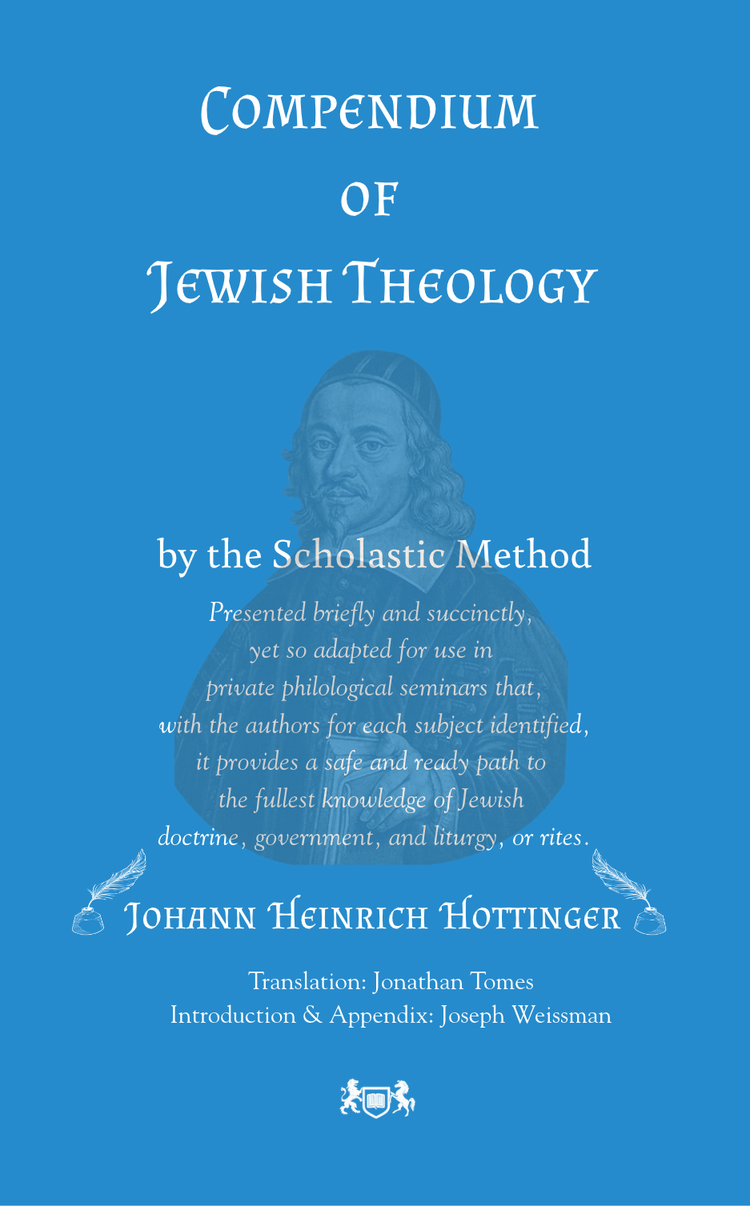
Compendium of Jewish Theology by the Scholastic Method
First published in 1661, Johann Heinrich Hottinger’s Compendium of Jewish Theology by the Scholastic Method offers a systematic survey of Jewish doctrine, government, and worship. Drawing extensively upon Jewish sources, Hottinger examines Scripture and tradition, the attributes of God, sin and repentance, messianic expectation, religious institutions, civil law, and ceremonial observances. Throughout, careful scholarship accompanies a distinctly Christian critique of rabbinic teaching. This English edition includes an appendix tracing later developments in Judaism. It provides a substantial resource for readers studying Jewish theology, biblical interpretation, and Christian apologetics.
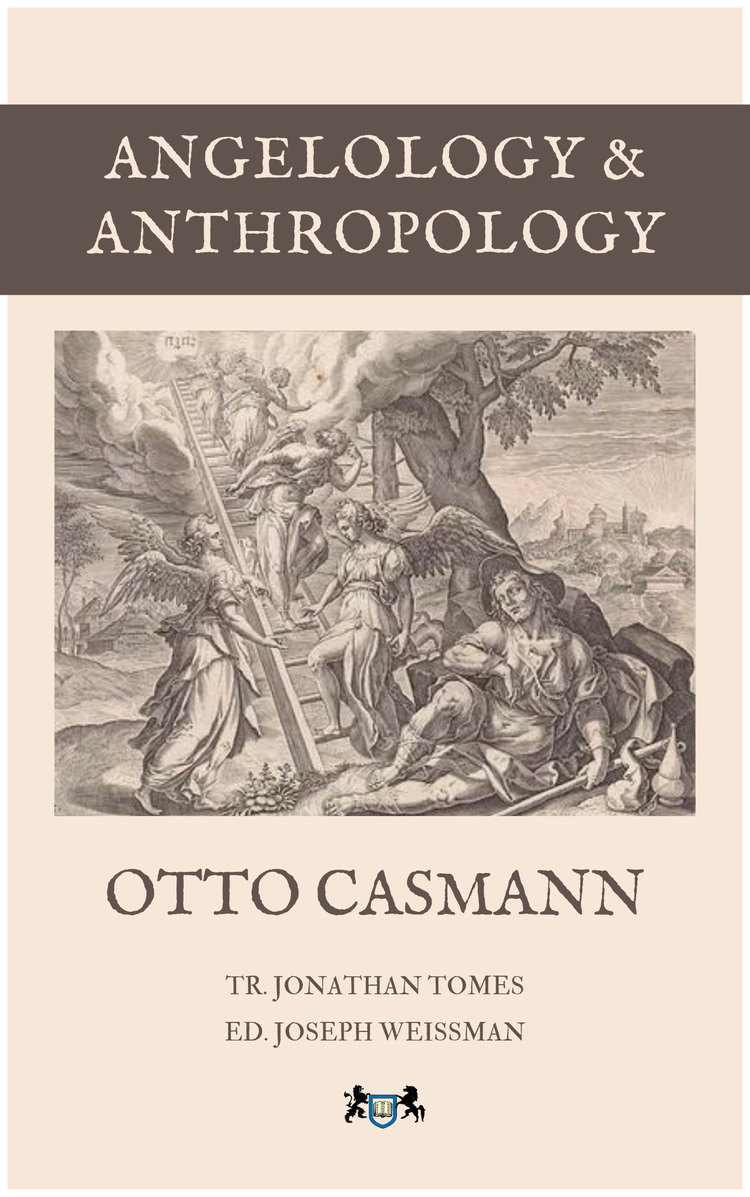
Angelology & Anthropology
This substantial set brings together Casmann’s Angelographia, Anthropological Psychology, or The Doctrine of the Human Soul, and The Fabric of the Human Body, the second part of his anthropology. Drawing upon Scripture, Christian theologians, philosophers, and physicians, Casmann examines angels, the powers of the human soul, and the structure and functions of the body within a connected account of God’s creation. These works recover an older Christian approach to understanding ourselves, in which the study of reason, will, sensation, and bodily life serves wisdom and piety. Together, they offer a rich resource for understanding how Protestant scholars joined theology, philosophy, and the study of nature.
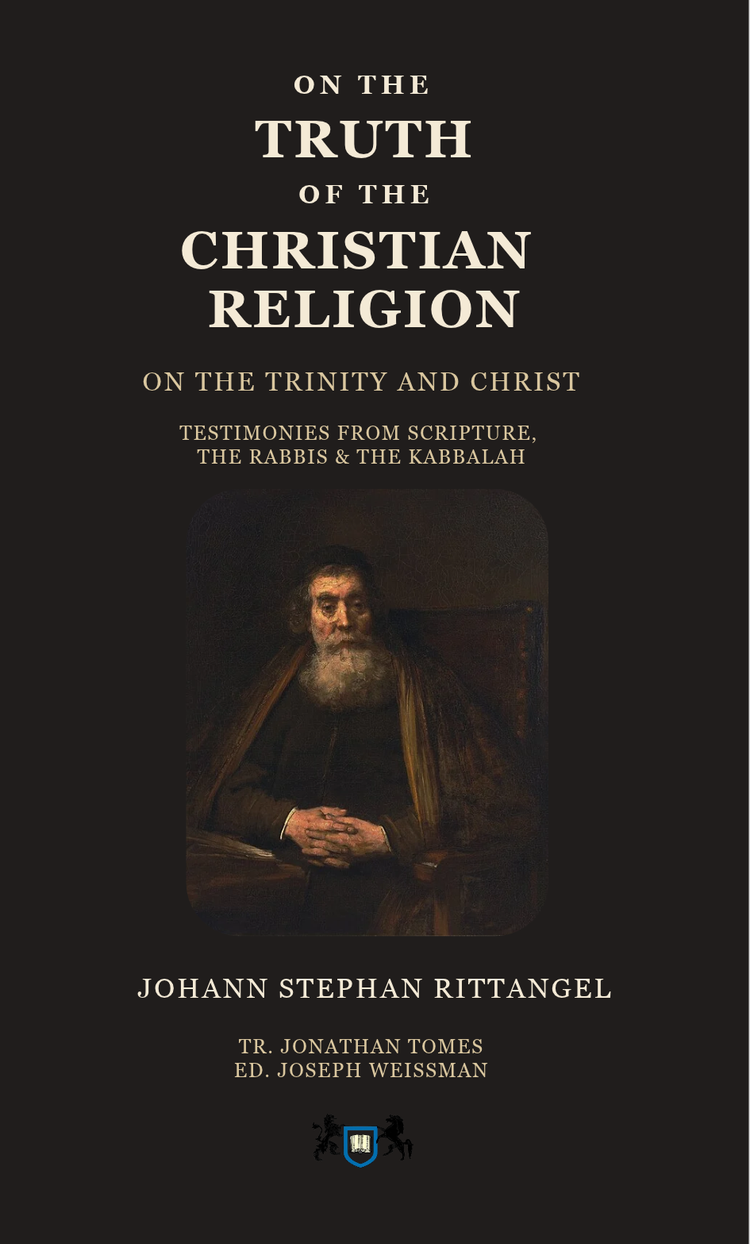
On the Truth of the Christian Religion
Can the writings of the Jewish rabbis preserve testimony to the very Christian doctrines their successors have rejected? In On the Truth of the Christian Religion, the seventeenth-century Christian Hebraist Johann Stephan Rittangel undertakes a remarkable defence of the Christian faith from the testimony of Sacred Scripture and Jewish literature. Drawing upon the Hebrew Scriptures, the Talmud, the Zohar, the Sefer Yetzirah, and numerous rabbinic authorities, Rittangel seeks to demonstrate that traces of the doctrines of the Holy Trinity, the eternal Son of God, and the promised Messiah have survived within the Jewish literary tradition. His extensive examination of Hebrew and Kabbalistic writings brings forward passages concerning divine Wisdom, the Word of God, the incarnation, and the redemptive work of Jesus Christ. In the second part, Rittangel turns his attention to the Kabbalistic methods of interpreting Scripture, exposing the dangers of arbitrary letter permutations, numerical calculations, and speculative interpretations while defending the grammatical sense of the sacred text.
The Judgment of the Ancient Jewish Church
The doctrine of the Trinity and the deity of Jesus Christ stand at the heart of the Christian faith. In this learned defense, Pierre Allix argues that their foundations were already revealed in the Old Testament and recognized in the ancient Jewish interpretation of Scripture. Drawing upon the Aramaic Targums, the writings of Philo, and other Jewish sources, Allix examines the divine Word, the appearances of the Angel of the Lord, and the promises of a Messiah who bears the name and attributes of Jehovah. He contends that Christ and His apostles proclaimed truths rooted in the revelation entrusted to Israel, answering the Unitarian claim that these doctrines arose through later corruption or the influence of Greek philosophy. Combining close biblical exposition with extensive historical argument, The Judgment of the Ancient Jewish Church offers a substantial Protestant defense of the unity of the Testaments and the eternal Godhead of our blessed Savior.
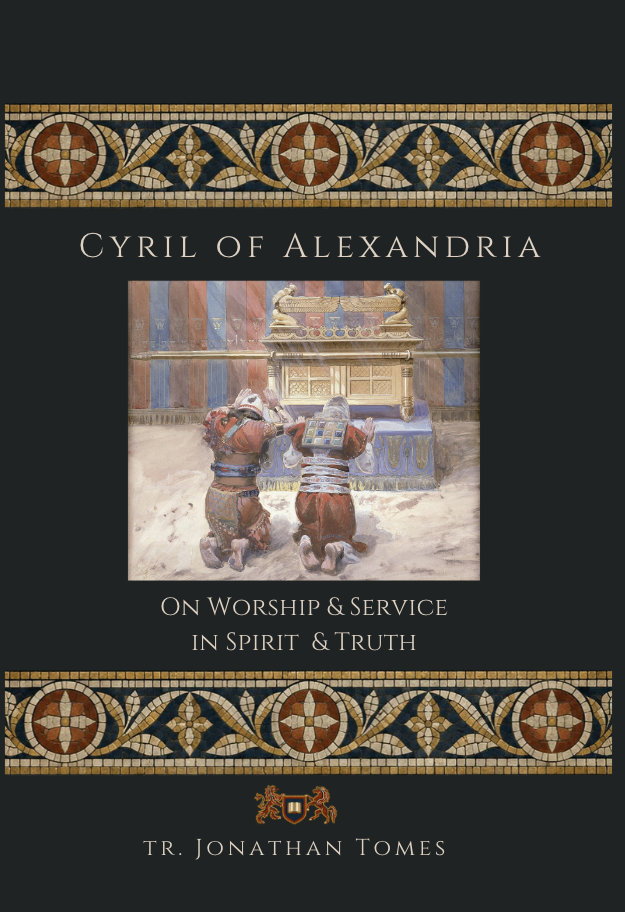
On Worship & Service in Spirit & Truth
In the sacrifices, priesthood, and feasts of ancient Israel, Cyril of Alexandria finds a sustained witness to Jesus Christ. Through seventeen dialogues with Palladius, he follows the types and shadows of the Mosaic law into their fulfillment in the Savior, through whom alone sinners draw near to God. Moving from deliverance out of bondage to cleansing, consecration, and the promised inheritance, Cyril joins his exposition of Scripture to instruction in repentance, brotherly love, and perseverance. To understand Israel’s worship is also to consider how the redeemed should live before God. Rich in biblical connections, On Worship and Service in Spirit and Truth invites readers to explore the unity of the Testaments with an early Christian interpreter for whom the study of Moses leads continually to Christ.
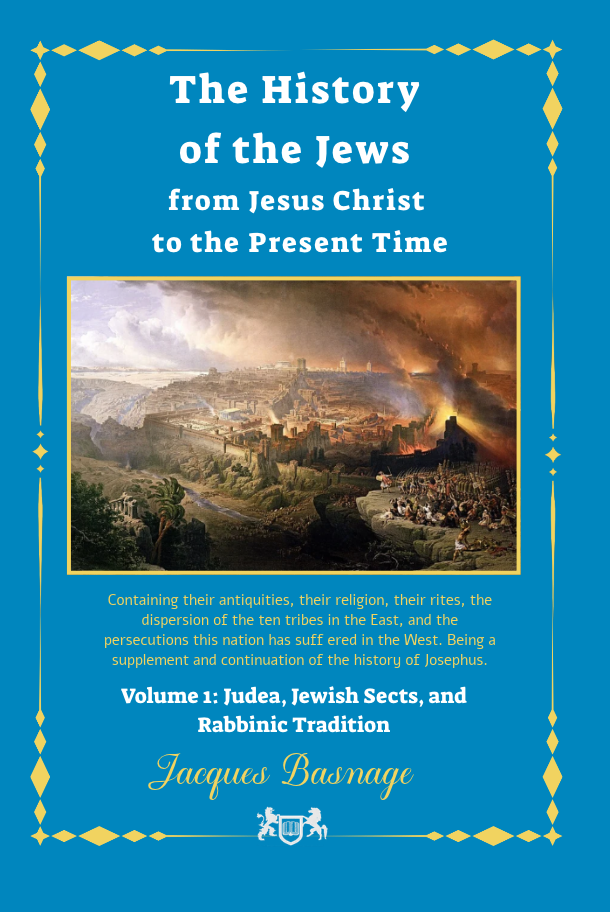
The History of the Jews from Jesus Christ to the Present Time
JACQUES BASNAGE (1653–1723) was a French Reformed theologian, historian, and diplomat, and one of the most distinguished scholars of the Huguenot exile. Born in Rouen, Normandy, he studied at Saumur, Geneva, and Sedan before entering the Protestant ministry in 1676. Following the revocation of the Edict of Nantes in 1685, he sought refuge in the Dutch Republic, where he served the Reformed churches of Rotterdam and The Hague. A prolific author whose writings embraced ecclesiastical history, theology, and religious controversy, Basnage also served as a diplomat and historiographer of Holland. His History of the Jews, conceived as a continuation of the writings of Josephus, became one of his most celebrated achievements. Drawing upon Jewish, Christian, and classical authorities, he produced an ambitious account of Jewish religion, learning, dispersion, and persecution from antiquity to his own century. His work remains an important monument of early modern historical scholarship.
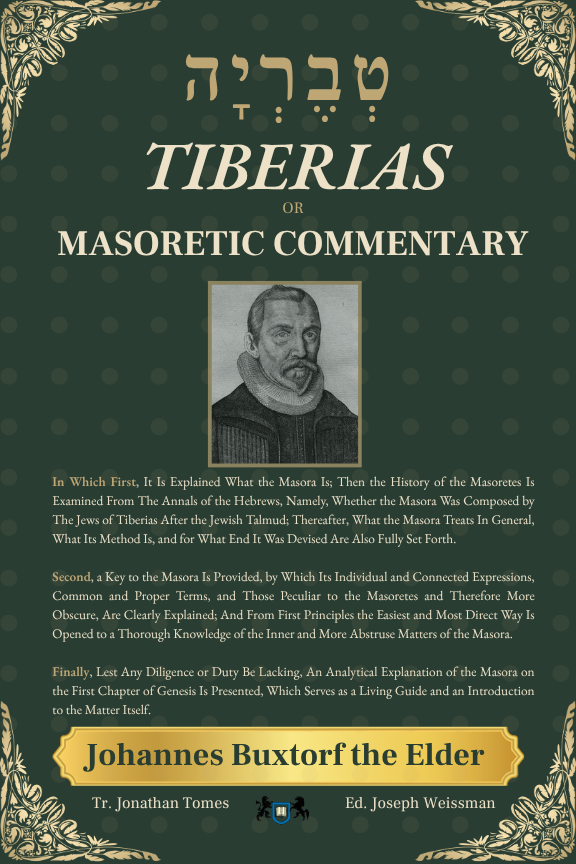
Tiberias
The Hebrew Bible’s marginal notes preserve an extensive record of the care devoted to its transmission, yet their compressed terminology can leave readers unsure how to use them. In Tiberias, Buxtorf explains the Masora’s purpose, examines the history of the Masoretes, and supplies a key to their technical expressions and abbreviations. He then demonstrates their use through a detailed exposition of the Masora on Genesis 1. Alongside his defense of the antiquity of the received reading tradition, this work offers practical instruction in understanding the textual safeguards surrounding the Hebrew Scriptures. It is a valuable companion for students of biblical Hebrew and the history of the Old Testament text.
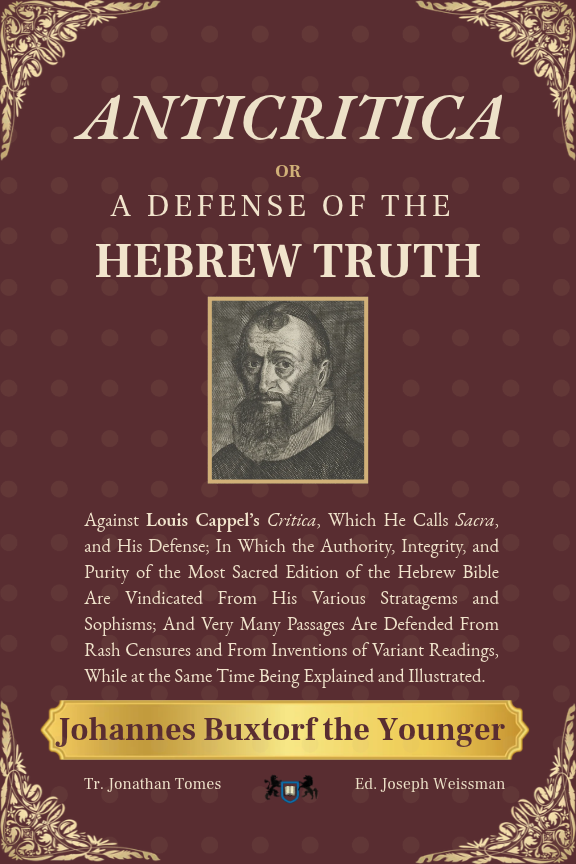
Anticritica
How should Christians assess claims that the received Hebrew Scriptures require correction from ancient translations or conjectured readings? In this substantial answer to Louis Cappel, Buxtorf defends the authority, integrity, and purity of the Hebrew Bible through close examination of disputed passages and the evidence brought against them. His argument combines theological concern for God’s preservation of Scripture with detailed philological reasoning. Anticritica brings readers into a major seventeenth-century controversy over the Old Testament text and restores access to a sustained scholarly defense of the Hebrew textual tradition received by the Reformed churches.
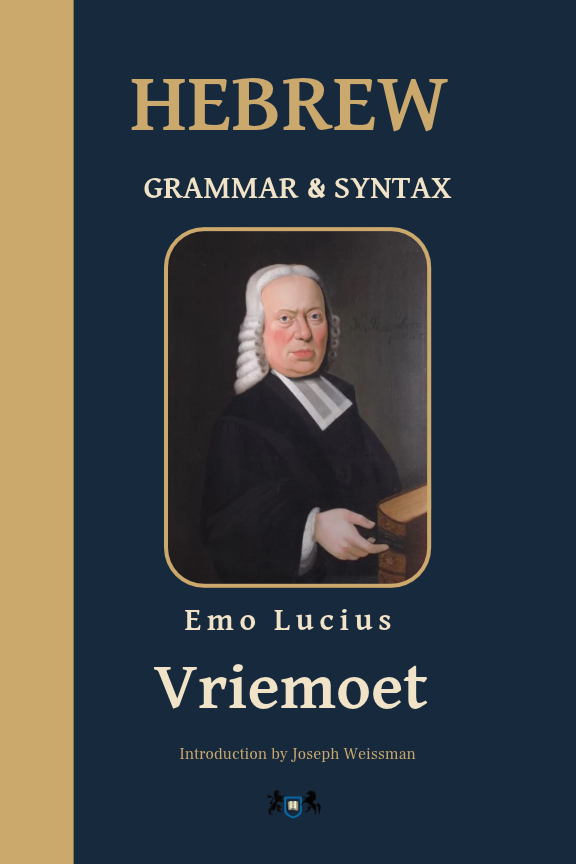
Hebrew Grammar & Syntax
Prepared for students beginning their study of the sacred language, Vriemoet’s handbook condenses Alting’s Hebrew grammar and Buxtorf’s syntax into a concise, ordered course. Tables of Hebrew accents, biblical reading exercises, and a supplementary Philological Outline connect grammatical instruction with the wider work of interpreting Scripture. Vriemoet gives particular attention to syntax, recognizing that familiarity with individual words and forms must lead to understanding how biblical sentences convey their meaning. This volume recovers a useful example of the linguistic training cultivated in the Reformed academies, where careful attention to Hebrew served theological understanding and the benefit of Christ’s church.
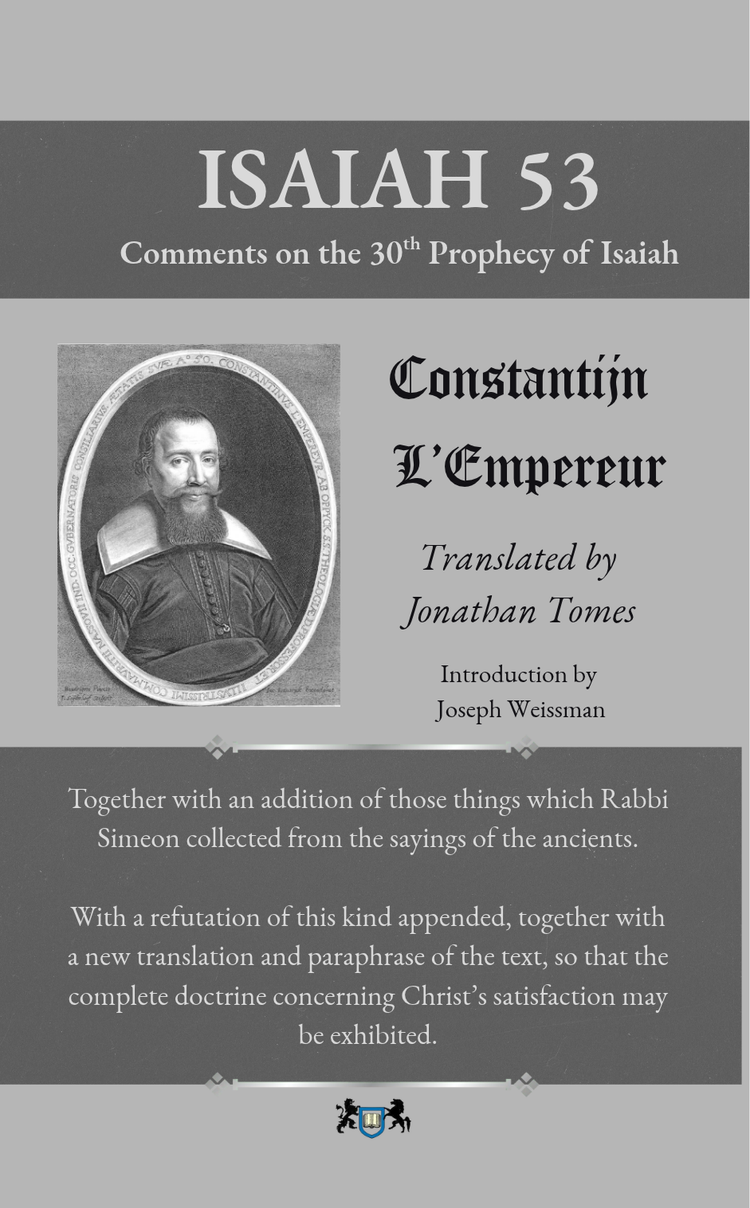
Isaiah 53
In this remarkable work, first published in 1631, the eminent Christian Hebraist Constantijn L’Empereur confronted the interpretations of two influential Jewish commentators, Isaac Abarbanel and Moses Alshech. Allowing them to speak at length in their own words, L’Empereur carefully tested their arguments against the Hebrew text and exposed the fallacies by which they sought to turn Isaiah’s prophecy away from Jesus Christ. Combining rigorous Hebrew scholarship, careful exegesis, and Christian conviction, L’Empereur presented a powerful defense of the true interpretation of Isaiah 53: that the Lord Jesus suffered as the Messiah in satisfaction for the sins of his people.
Key to the Talmud
The Talmud’s arguments often depend upon technical expressions, established rules of interpretation, and distinctions unfamiliar to the ordinary reader. Constantijn L’Empereur’s Key to the Talmud offers a unique insight into the terminology, argumentative forms, and interpretive methods employed by the rabbis. Originally published in Latin in 1634, the Key brings together Joshua ha-Levi’s Halikhot Olam and the introduction to the Talmud traditionally attributed to Samuel ha-Nagid.
Enhanced Translation
Much of the church’s rich Reformed inheritance remains beyond the reach of English readers, locked within untranslated Latin volumes. In Enhanced Translation, Joseph Weissman and Jonathan Tomes explore how artificial intelligence, guided by skilled translators and editors and careful judgment, can help bring these neglected works into English. Drawing on Protestant responses to the printing press, concrete translation examples, and contemporary debates, they explain how Berith Press’s approach seeks to preserve an author’s meaning, theological distinctions, argument, and voice in clear, readable prose. The book addresses serious objections to AI involvement in translation, examines omissions in earlier editions, and walks readers through the importance of establishing sources, checking translations, and explaining uncertainty. Written for pastors, students, and thoughtful readers, it offers a hopeful Christian case for employing new tools with the truthfulness and accountability owed to authors and readers alike.
Politics
For the first time, God willing, English-speaking readers will have access to the complete, unabridged Politics of Johannes Althusius (1557–1638), one of the most important works of Reformed political theology ever written. Frederick S. Carney’s influential twentieth-century translation, first published in 1964 and later reissued by Liberty Fund, omitted approximately 300,000 words, leaving nearly two-thirds of Althusius’s numbered sections wholly untranslated and considerably abridging many others. Consequently, generations of readers have encountered only a fraction of Althusius’s vast biblical, theological, historical, legal, and political argumentation. This landmark translation for Berith Press restores the entirety of the enlarged 1614 edition, including its extensive scriptural exposition, classical authorities, historical illustrations, legal reasoning, and the long-neglected Panegyrical Oration on Schools. Without abridgement or omission, this monumental undertaking retrieves Althusius’s complete vision of Christian commonwealth, covenantal society, political authority, and resistance to tyranny, making one of the Reformed tradition’s greatest intellectual achievements available in English in its original fullness.
The Works of
Serving as Bishop of Turin during the Carolingian era, Claudius distinguished himself through his vigorous opposition to the veneration of images, relics, and the cross, while emphasizing the supreme authority of Holy Scripture and the sufficiency of Christ as the only Mediator between God and man. His writings offer an extraordinary witness to biblical convictions that would later become central to the Protestant Reformation, centuries before Luther and Calvin. Long celebrated by Protestant historians as an important precursor to the Reformation, yet frequently neglected in modern accounts of medieval Christianity, Claudius occupies a significant place in the recovery of the church's historical testimony against superstition and ecclesiastical corruption. This translation seeks to retrieve this neglected body of early medieval theological literature for English-speaking readers, enabling a fresh examination of Claudius's biblical exegesis, doctrinal convictions, and enduring significance for the history of Protestantism. This publication promises to make an important contribution to the Protestant retrieval of the pre-Reformation church, demonstrating that the theological controversies of the sixteenth century possessed a far deeper historical background than is often supposed.
The Four Last Things
Death, judgment, heaven, and hell deserve our most serious consideration. With eloquence and pastoral warmth, William Bates presses these eternal realities upon the conscience, calling readers to prepare for death through faith in Christ. These discourses offer searching warnings to the careless and substantial comfort to believers awaiting the glory to come.
Commentary on Hebrews
Drawn from thirty years of preaching, William Gouge’s extensive commentary joins close attention to the Greek text with doctrinal instruction and practical application. Exploring Christ’s person, priesthood, sacrifice, and covenant, Gouge unfolds the riches of Hebrews while addressing questions of conscience and Christian perseverance. A substantial resource for ministers, students, and serious readers of Scripture.
An Exposition of Romans
John Brown of Wamphray brings theological precision and pastoral earnestness to Paul’s Epistle to the Romans. His exposition treats justification by faith, union with Christ, election, sanctification, and the Christian life, drawing abundant practical observations from the text. This Scottish Covenanter’s lectures continually direct readers to Christ’s righteousness as the sinner’s only ground of acceptance before God.
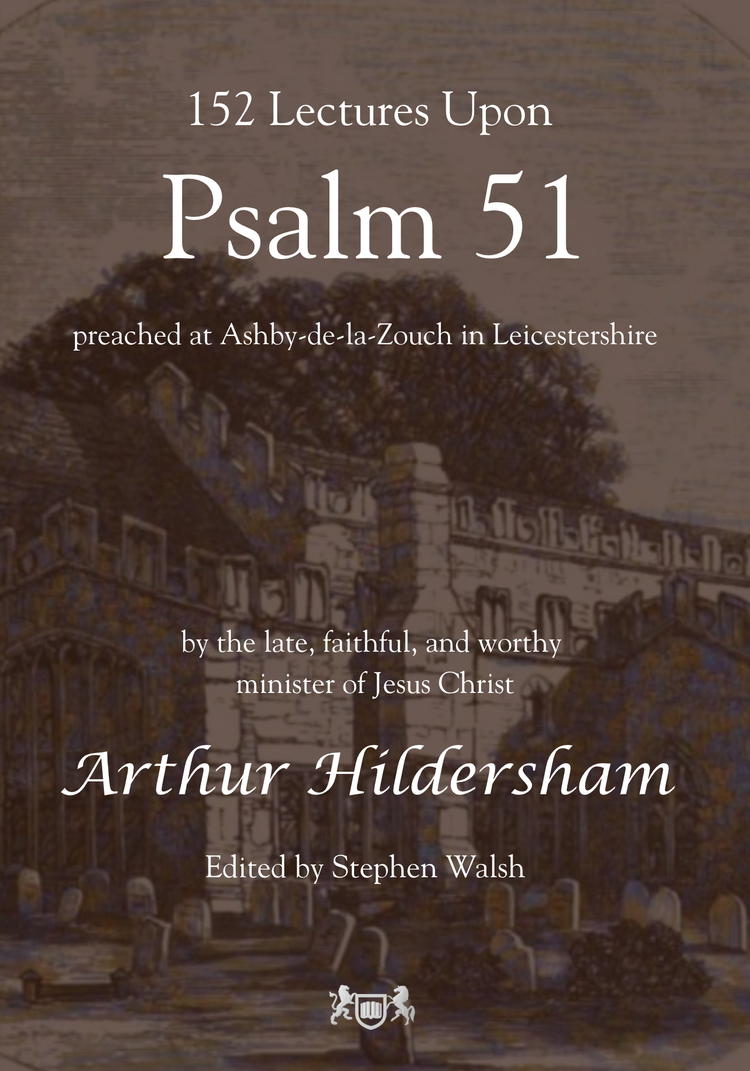
152 Lectures upon Psalm 51
Arthur Hildersham’s expansive treatment of David’s penitential psalm explores the gravity of sin, the necessity of repentance, and the comfort of divine forgiveness. Preached at Ashby-de-la-Zouch, these lectures unite detailed exposition with searching pastoral counsel. Readers will find substantial instruction on prayer, the ministry of the Word, assurance, and the restoration of fallen believers.
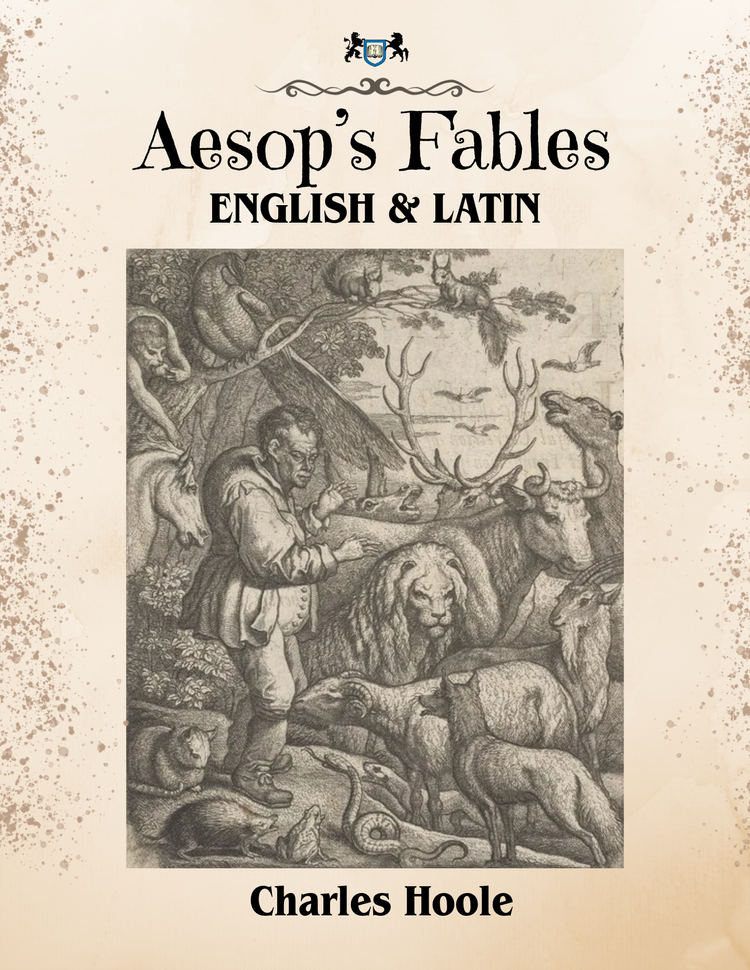
Aesop’s Fables
Charles Hoole’s seventeenth-century schoolbook brings Aesop’s memorable stories into the service of language learning and moral instruction. Our edition presents the English and Latin on facing pages, accompanied by Francis Barlow’s original illustrations. Numbered passages support comparison and translation, making this an inviting resource for classical classrooms, home educators, and readers who enjoy these enduring tales.
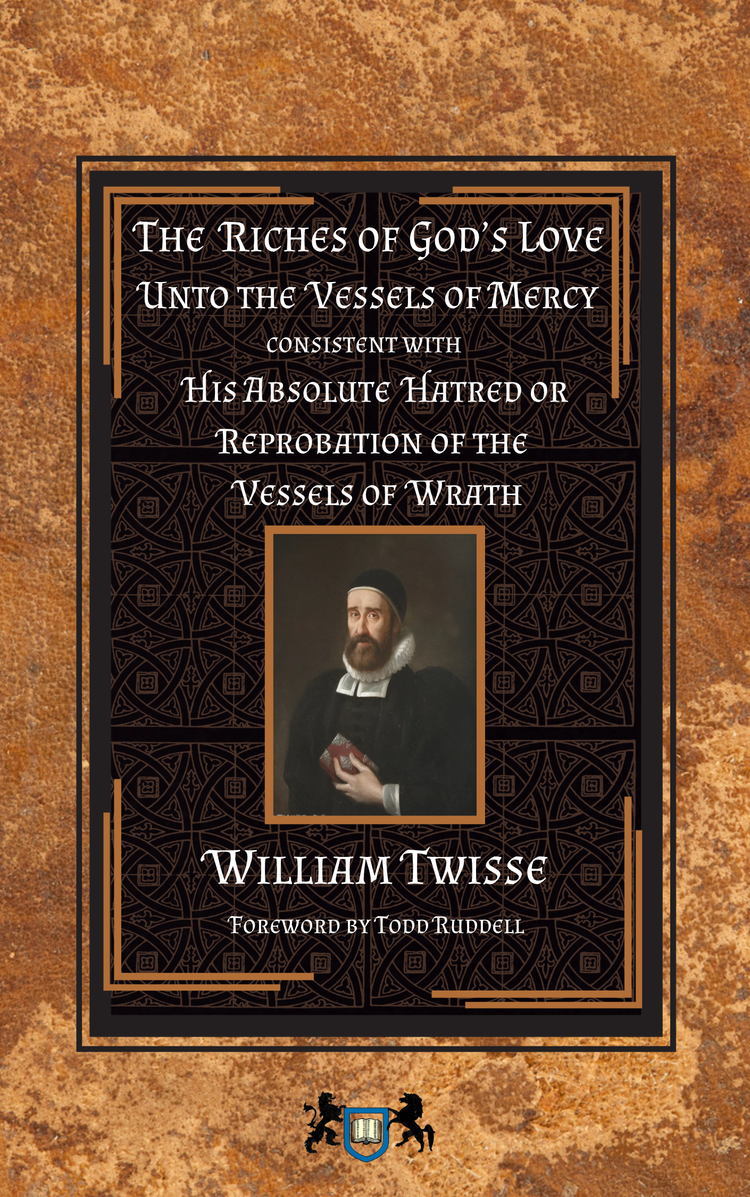
The Riches of God’s Love unto the Vessels of Mercy
William Twisse examines how God’s sovereign election and reprobation accord with his goodness, justice, and mercy. Answering objections to the divine decrees, this substantial work offers sustained biblical and theological argument concerning grace, human responsibility, and salvation. It rewards readers seeking a fuller understanding of the convictions defended by the Westminster Assembly’s first prolocutor.
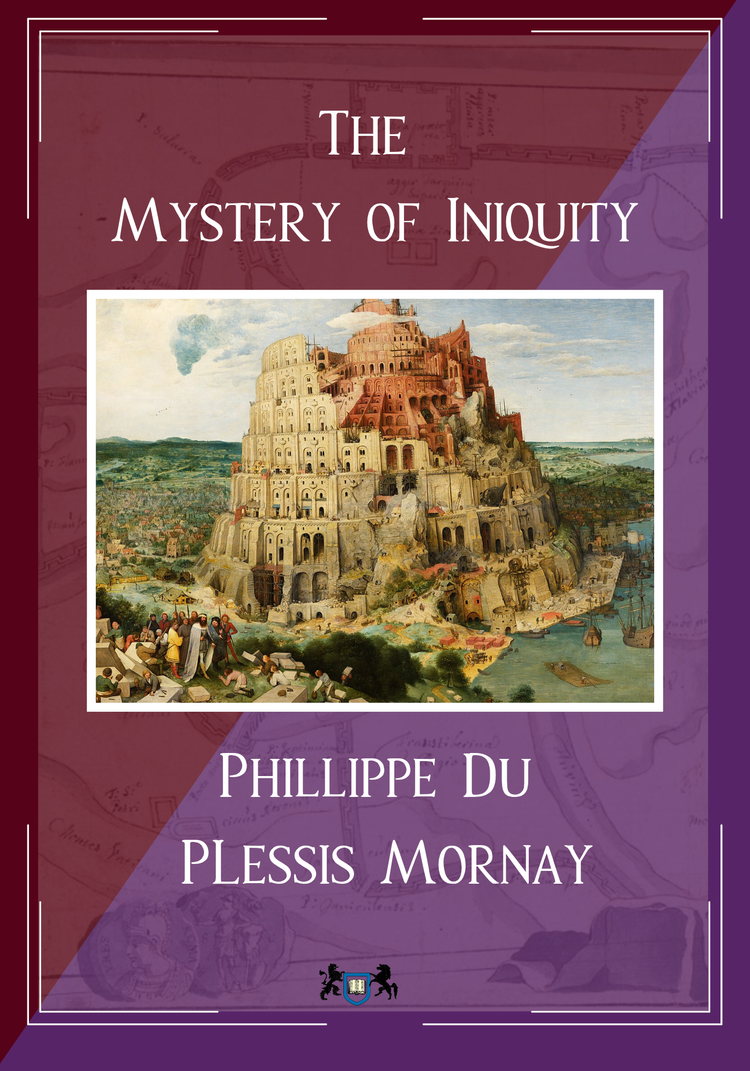
The Mystery of Iniquity: The History of the Papacy
How did the bishops of Rome come to claim supremacy over churches and kingdoms? Huguenot theologian Philippe Du Plessis-Mornay traces the development of papal power and the opposition it encountered across the centuries. Presented in Samson Lennard’s English translation, this extensive Protestant history challenges Rome’s claims through engagement with historical witnesses, councils, and ecclesiastical controversies.
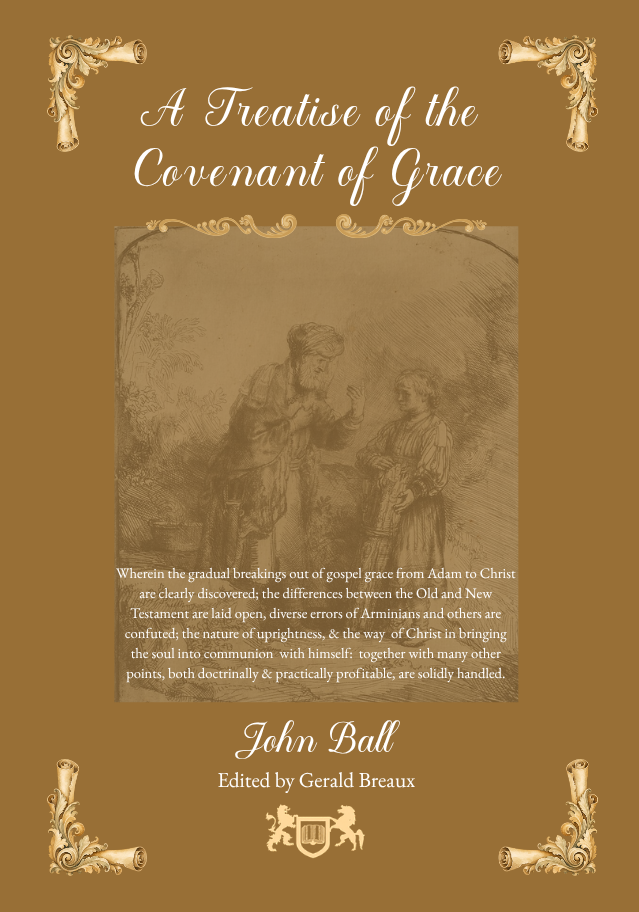
A Treatise of the Covenant of Grace
John Ball traces the unfolding of God’s covenant promises from Adam to Christ, explaining the unity of salvation and the differences between the Old and New Testaments. Joining doctrinal argument with practical instruction, he considers faith, obedience, and communion with Christ. This substantial Puritan treatment helps readers understand Scripture’s covenantal structure and the believer’s comfort in God’s promises.
Faithful to the Originals.
We preserve the original words of the original authors, without censoriously and surreptitiously striking out content.