



Multi-Volume Sets

In this vast 17th-century work of philology and philosophy, Theophilus Gale traces the history of Hebrew language and thought from antiquity, and its impact and reception among the Gentiles, exploring such questions as the scope of Phoenician power, the source of Plato, Aristotle, and Pythagoras' philosophical thought, and the identity of many pagan deities. Freshly re-typeset for clarity of reading, these tomes help the modern reader to recover and restore the faded doctrine of Christian euhemerism.
Part I: Of Philology
Part II: Of Philosophy
Part III & Part 4 Book 1: Of Pagan & Reformed Philosophy
Part IV Books 2 & 3: Of Metaphysic & Predetermination
6x9 Hardcover with dust jacket
Page Numbers:
Part I - 478
Part II - 670
Part III & Part 4 Book 1 - 574
Part IV Books 2 & 3 - 650
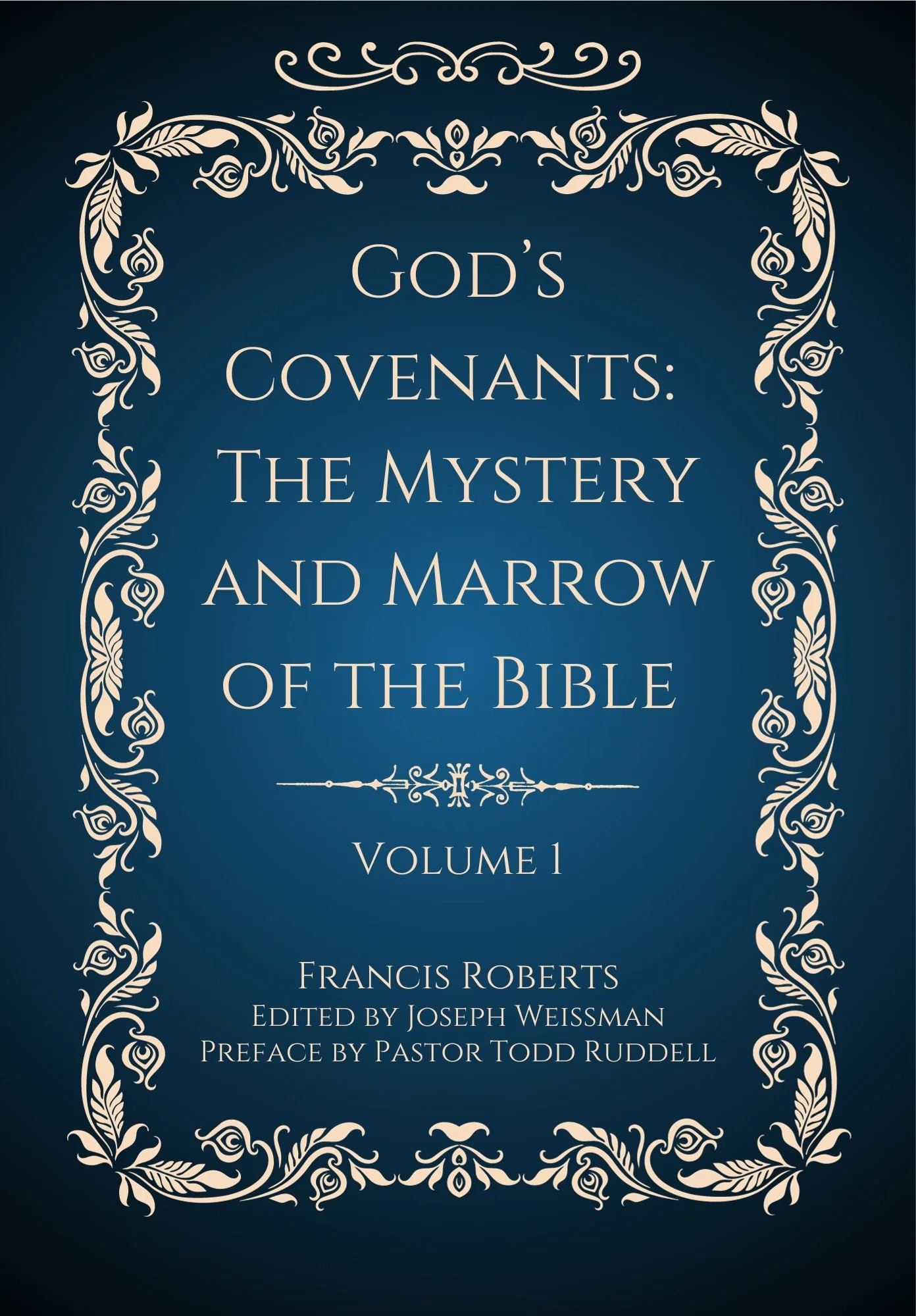

With a preface from Dr. Todd Ruddell of Whitefield Theological Seminary, these new volumes brought to print enable the Reformed world to access Francis Roberts’ work afresh – newly typeset for the first time in over 380 years, and edited only for readability. Original Hebrew, Greek and Latin phrases have been preserved. These volumes are set to be 6”x9” with a digital cloth cover, complete with a dust jacket as illustrated here.
Francis Roberts produced the most vast Reformed work ever brought to print on covenant theology. Quoting copiously from Calvin, Perkins, Augustine, and others, as well as regularly citing Scripture, Roberts’ volumes contain several thousand footnotes, which have been carefully and diligently placed into these volumes also.
Roberts divides the Covenant of Grace into two main phases: the Old Covenant being the Covenants of Promise, citing Ephesians 2:12, and the New Covenant being the Covenant of Performance, citing Luke 1:72. The Covenants of Promise are, in turn, sub-distinguished into six covenant “expressures”: firstly with Adam after the fall, secondly with Noah, thirdly with Abraham, fourthly with Moses, fifthly with David, and sixthly with the exiles in Babylon. In all these covenants, Christ was set forth in a promissory manner, and salvation was through faith in Christ alone.
Roberts deals with controversies such as whether the Mosaic Covenant was properly a Covenant of Works, whether the Noahic Covenant was merely a universal covenant with mankind, justification by faith as the condition of God’s Covenant, Christ as the formal party with whom God covenants (the church being covenanted as Christ’s body and seed), and also the nature of the Covenant of Works in Scripture – as well as dealing in depth with the Mosaic judicial, moral and ceremonial law, and how the law is and isn't applicable for us today.
Here is an overview of each volume within this set – the first three volumes are coming soon.
Volume 1: Covenant Theology in General; the Covenant of Works; the Covenant of Grace as Expressed unto Adam; the Covenant of Grace as Expressed unto Noah.
Volume 2: The Covenant of Grace as Expressed unto Abraham.
Volume 3: The Covenant of Grace as Expressed unto Moses.
Volume 4: The Covenant of Grace as Expressed unto David; the Covenant of Grace as Expressed unto the exiles in Babylon.
Volumes 5: The Covenant of Grace in its Performance by Jesus Christ, that is: the New Covenant.
Hardcover with dust jacket
Page numbers:
Volume 1 - 552
Volume 2 - 646
Volume 3 - 592
Volume 4 - 592
Volume 5 - 673
6x9
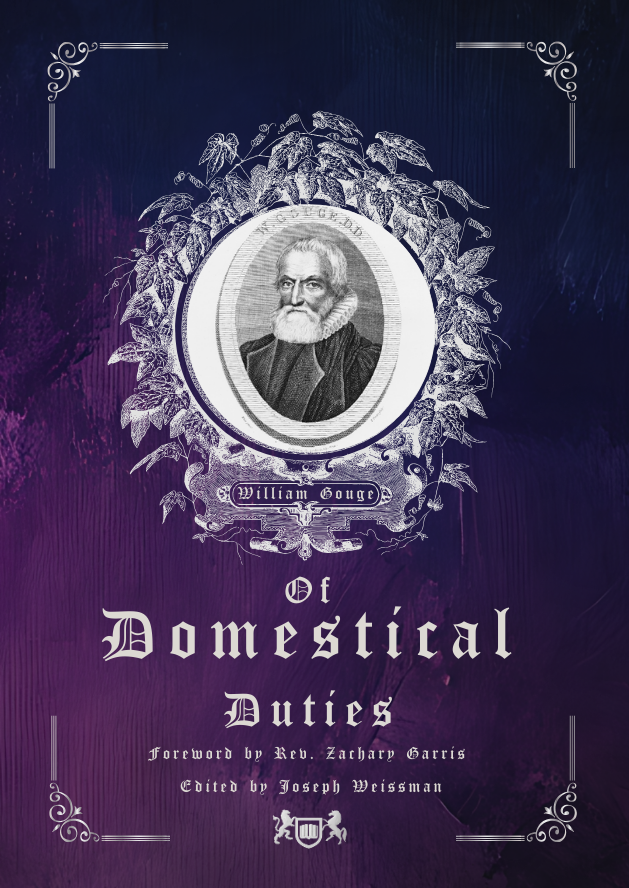
In Domestical Duties, William Gouge exposits that part of Scripture wherein we find domestical duties set forth, namely: Ephesians 5:21-6:9. He goes on to detail the right way that husbands and wives should be joined together in marriage, and their mutual duties. Gouge then sets forth the particular duties of wives, husbands, children, parents, servants, and masters. With over 3,000 footnotes, including several fresh translations, this book is an excellent resource for pastors and laymen alike.
Paperback: 5×8, 8 volumes
Hardcover with dust jacket: 6×9, 2 volumes
LOOK INSIDE
Available: August 3, 2026
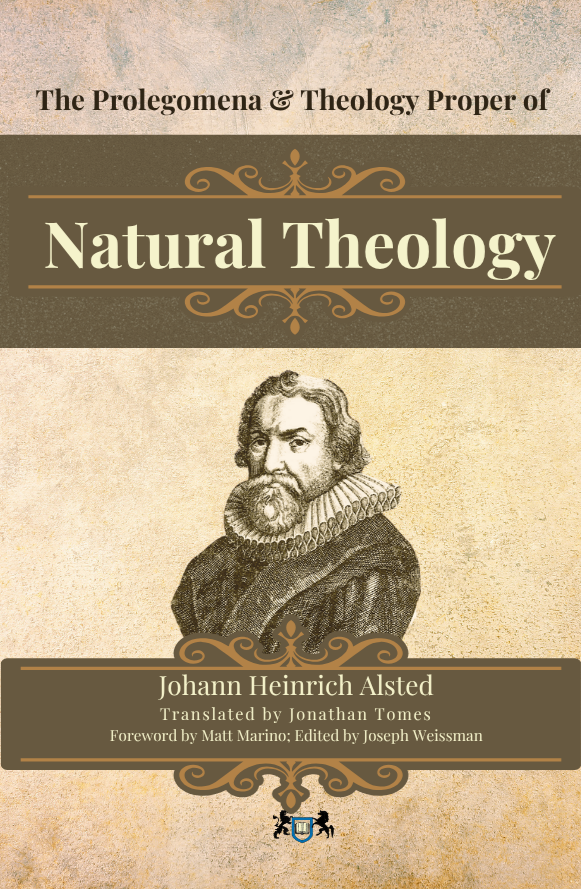
In the first part of Natural Theology, Johann Alsted considers the general aspects of the topic, such as the proofs of God and his attributes, how to understand his figurative properties, the worship due to him, and what the condition of men is after this life.
In the second part of Natural Theology, Johann Alsted considers the method of Book of Nature, angels, the properties of natural bodies, meteorological phenomena, land animals, sea creatures, and the four states of man: economic, scholastic, sacred, and political; and more besides.
Hardcover with dust jacket
6×9
Volume 1: 408 pages
Volume 2: 638 pages
Faithful to the Originals.
We preserve the original words of the original authors, without censoriously and surreptitiously striking out content.