 Image 1 of 1
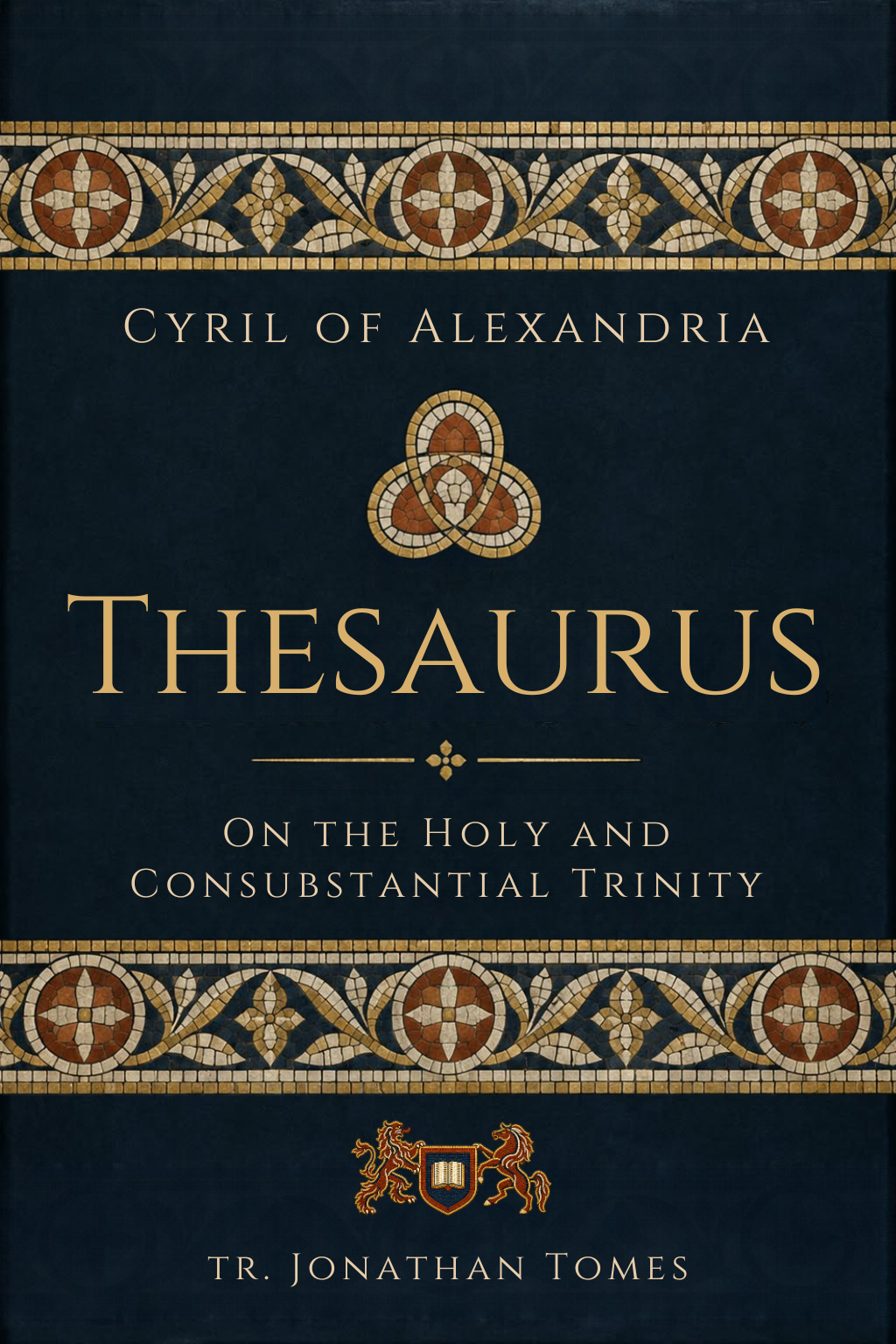
Cyril of Alexandria’s Thesaurus on the Holy and Consubstantial Trinity is one of his major early Trinitarian works and a sustained defense of Nicene doctrine against Arian and Eunomian arguments. Drawing extensively upon Scripture, Cyril argues that the Son is not a creature but is God by nature, sharing the divine essence and glory of the Father. In its concluding sections, he likewise defends the divinity of the Holy Spirit and the unity of the Holy Trinity. Combining close biblical exegesis with rigorous theological argument, the Thesaurus offers an important witness to the reception and defense of Nicene theology in the fifth-century Church.
Cyril of Alexandria (c. 376–444) was patriarch of Alexandria and one of the most influential theologians of the early Church. A leading defender of Nicene orthodoxy, he wrote extensively on the Trinity, Christology, and Scripture and played a central role at the Council of Ephesus in 431. His theological works profoundly shaped subsequent Christian reflection on the person of Christ and the doctrine of God. Cyril is recognized as a Doctor of the Church.
6×9
Hardcover with Dust Jacket
524 pages
Cyril of Alexandria’s Thesaurus on the Holy and Consubstantial Trinity is one of his major early Trinitarian works and a sustained defense of Nicene doctrine against Arian and Eunomian arguments. Drawing extensively upon Scripture, Cyril argues that the Son is not a creature but is God by nature, sharing the divine essence and glory of the Father. In its concluding sections, he likewise defends the divinity of the Holy Spirit and the unity of the Holy Trinity. Combining close biblical exegesis with rigorous theological argument, the Thesaurus offers an important witness to the reception and defense of Nicene theology in the fifth-century Church.
Cyril of Alexandria (c. 376–444) was patriarch of Alexandria and one of the most influential theologians of the early Church. A leading defender of Nicene orthodoxy, he wrote extensively on the Trinity, Christology, and Scripture and played a central role at the Council of Ephesus in 431. His theological works profoundly shaped subsequent Christian reflection on the person of Christ and the doctrine of God. Cyril is recognized as a Doctor of the Church.
6×9
Hardcover with Dust Jacket
524 pages